Parambikulam
Wildlife sanctuary
Introduction :
Tucked away in the valley between the
Anamali Ranges of Tamil Nadu and the Nelliampathy Ranges of
Kerala on the majestic Western Ghats is the Parambikulam Wildlife
sanctuary, a fine example of serene, tranquil and undisturbed
eco system. Situated in Palakkad district, it was originally
a small tract of reserve forest of 48 sq.kms. However, owing
to growing wildlife needs, it was expanded in 1962, and today
it is a vast expanse of greenery of 285sq.kms in area.
Ideally suited to the growth
of teak, the tract encouraged large scale teak plantations
thorugh artifical regeneration in the early 20's. This was,
however, abandoned when a full-fledged Wildlife department
was formed in 1985. 9,000 ha of teak plantations in the sanctuary
are being managed in such a way as to restore the forest's
original status. A giant teak tree 40m high and 6.4m in girth
is a standing monument of the past aptly named 'Kannimaram'.
Topography
:
Several streams originate from the hill ranges
and flow down westward to join the river Chalakudi. The terrain
is most undulating with a valley in the basin. The Karimala
Gopuram is the highest peak (1444m). The average elevation
is about 600m.
Climate
:
The sanctuary receives much heaviyer rains between June and
August. The eastern part of the sanctuary receives more rains
in October-November. Temperature drops substantially and mist
envelops the sanctuary in the morning hours.
Forest
Types :
Natural forests
are classifieds as follows;
1. West coast
tropical evergreen forests.
2. West coast
semi evergreen forests.
3. South Indian
moist deciduous forests.
4. South Indian
dry deceiduous forests.
5. Moist bamboo
brakes.
6. Reed brakes.
Tropical
Evergreen forests (Area 50 sq.kms approximately) :
A Wide variety of trees
grow here. The top canopy consists of Palai, Punna, Nangu,
Vediplavu, Kalpine, Aini, Vellapine, Kambakam, Vellagil, Pathiri,
Nedunar, etc.Lower canopy predominantly consists of Vetti,
Kara, Nasagam, Marotti, Kurukutti, Cheru, Mullialvu etc. Undergrowth
comprises Antidesma, Calamus, Glycosmis, lxora species, etc.
Fauna
:
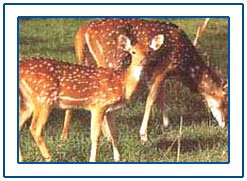
Mammals: Bonnet
macaque, Liontailed macaque, Nilgiri langur, Loris, Tiger,
Leopar, Jungle cat, Civet, Mongoose, Fox, Bear, Elephant,
Gaur, Nilgiri Tahr, Spotted Deer, Sambar, Barking deer, Wild
boar, Pangolin etc.
Reptiles
:
Crocodile, Varanus, Pond Terapin, Cane Turtle, Gecko Skink,
Chameleon,Snakes like King Cobra, Spectacled Cobra, Krait,
Viper, Python,Green keel back, Rat snake, Vine snake etc.
Fishes
:
Aral,bral,vattudi,thilopia, noori, mooshu, poochutti, kollotty,
exyprius,taral, etc.
Birds
:
Darter, Little Cormorant, Black eagle, Lesser adjutant stork,
Black capped kingfisher, Great Indian hornbill, Broad billed
roller, Black woodpecker.
Travel
Information :
The sanctuary is accessible
by road. Buses ply between Pollachi and Parambikulam. Pollachi
is 60kms away and has a railway station. The nearest airport
is Coimbatore, 100kms away. Visitors can have boat rides in
the Parambikulam lake and tour the sanctuary with the help
of guides

|