Ranthambore
[Rajasthan]
Ranthambore is 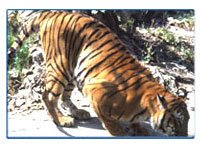 a
small village near the township of Sawai Madhopur, in the state
of Rajasthan, Ranthambhore gets its name from the two hills, Ran
and Thambor, which are in close proximity. The Ranthambore Park
is set between the Aravalli and Vindhya ranges. Its deciduous
forests were once a part of the magnificent jungles of Central
India. The terrain is rugged and there are rocky ridges, hills
and open valleys with lakes and pools.
a
small village near the township of Sawai Madhopur, in the state
of Rajasthan, Ranthambhore gets its name from the two hills, Ran
and Thambor, which are in close proximity. The Ranthambore Park
is set between the Aravalli and Vindhya ranges. Its deciduous
forests were once a part of the magnificent jungles of Central
India. The terrain is rugged and there are rocky ridges, hills
and open valleys with lakes and pools.
Ranthambhore is a heritage site because of the
picturesque ruins that dot the park. There are lake palaces, 'chhatris',
old fortifications and a majestic 1,000-year-old fort overlooking
the park. The lovely Jogi Mahal is located at the foot of the
fort and gives magnificent view of the Padam Talao, painted white
with water lilies.
Ranthambhor is one of the best places to see
these majestic predators. Old crumbling walls, ruined pavilions,
wells, and other ancient structures stand witness to the region's
glorious past. The entire forest is peppered with the battlements
and spillovers of the Ranthambhore fort - tigers are said to frequent
these ruins, too.
Places Of Interest
(Ranthambore)
Ranthambore National Park
Ranthambhor National Park is an outstanding example
of Project Tiger's efforts at conservation in the country. The
forests around the Ranthambhore Fort were once, the private hunting
grounds of the Maharajas of Jaipur. The desire to preserve the
game in these forests for sport was responsible for their conservation,
and subsequent rescue by Project Tiger. In 1972, it was estimated
that there were around 1927 tigers in India, of which Rajasthan
had 74, and the number of big cats in Ranthambhore Sanctuary was
14. 1972 was also the year that Project Tiger was launched, and
this sanctuary was taken into its wings, alongwith seven other
sanctuaries and national parks.
The Fort
Steep crags embrace a network of lakes and rivers, and atop one
of these hills, is the impressive Ranthambhore Fort. Built in
the 10th century, the fort is considered to be one of the oldest
forts in the state. Strategically built on the border of Rajasthan
and Malwa, the fort houses some splendid monuments, within its
precincts. The terrain fluctuates between impregnable forests
and open bush land. The forest is the typically dry deciduous
type, with Dhok, being the most prominent tree.
The Jogi Mahal
The entry point to the park, goes straight to the foot of the
fort and the forest rest house, Jogi Mahal. The latter boasts
of the second-largest Banyan tree in India.
Travel Information
(Ranthambore)
Air : Jaipur
(145-km) is the nearest airport.
Rail : The
Park is around 11-km away from Sawai Madhopur railway station,
that lies on the Delhi to Bombay trunk route.
Road : A good
network of buses connects Sawai Madhopur, the nearest town, with
quite a few areas around.