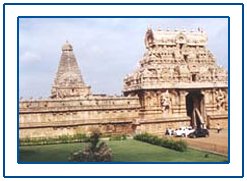
The sikhara, a cupolic dome, is octagonal and rests on a single block of granite, a square of 7.8 m weighing 80 tons. The majestic upapitha and adhishthana are common to all the axially placed entities like the ardhamaha and mukha-mandapas and linked to the main sanctum but approached through a north-south transept across the ardha-mandapa which is marked by lofty sopanas. The moulded plinth is extensively engraved with inscriptions by its royal builder who refers to his many endowments, pious acts and organisational events connected to the temple. The brihad-linga within the sanctum is 8.7 m high. Life-size iconographic representations on the wall niches and inner passage include Durga, Lakshmi, Sarasvati and Bhikshatana, Virabhadra Kalantaka, Natesa, Ardhanarisvara and Alingana forms of Siva. The mural paintings on the walls of the lower ambulatory inside are finest examples of Chola and later periods.
Sarfoji, a local Maratha ruler, rebuilt the Ganapati shrine. The celebrated Thanjavur school of paintings of the Nayakas are largely superimposed over the Chola murals
.